Another Look at ESG Cold Noodles
Another Update from the Empire Szechuan Noodle Quest
[Click here for the previous, lengthy tome from 2020.]
AI weighs In
My occasional pen pal, Kevin, who is even more obsessed with recreating Empire Szechuan Gourmet noodles than I am, sent me a link to the newest version of the recipe (also shown below).
He asked AI for its take and got a few new suggestions, like steeping garlic and ginger in water to make a sort of ginger-garlic tea to use in the thin sauce. It also adds a bit of black vinegar and a dash of msg. Gone is the peanut oil for the thick sauce, which I kind of miss; If only AI could taste the noodles. Happily, I can and did. My review follows the recipe.
Step 1: The Noodles
Use fresh, thin Chinese egg noodles (sometimes labeled as “Hong Kong style” or “Lo Mein” noodles). Cook them just until al dente, rinse them under freezing cold water until they are totally stripped of surface starch, drain them aggressively, and toss them with a little plain vegetable oil so they don’t stick.
Step 2: The Base Liquid (The Thin Liquid)
Whisk these together until the sugar completely dissolves. It should be thin, dark brown, sweet, savory, and mildly complex.
- Light Soy Sauce 3 tbsp
- Garlic-Ginger Water (Steep 3 smashed garlic cloves and 1 slice of ginger in 1/4 cup warm water for 15 mins, then strain) 2 tbsp
- Chinkiang Black Vinegar 1 tbsp
- White Granulated Sugar 1 tbsp
- MSG 1/4 tsp
Step 3: The Nut Paste (The Thick Topping)
Whisk the sesame paste and peanut butter together, then gradually stream in the sesame oil until it is smooth but thick enough to hold its shape when ladled.
- Chinese Toasted Sesame Paste (Must be the oil-topped jarred kind made from roasted seeds, like Wangzhihe brand) 3 tbsp
- Smooth Peanut Butter (Skippy or Jif — do not use natural/organic peanut butter here, as it lacks the emulsifiers used in the 80s) 1 tbsp
- Toasted Sesame Oil (To loosen the paste) 1 to 2 tbsp
- Optional: Splash of pure Szechuan chili oil (no flakes) for a hint of warmth.
To Assemble:
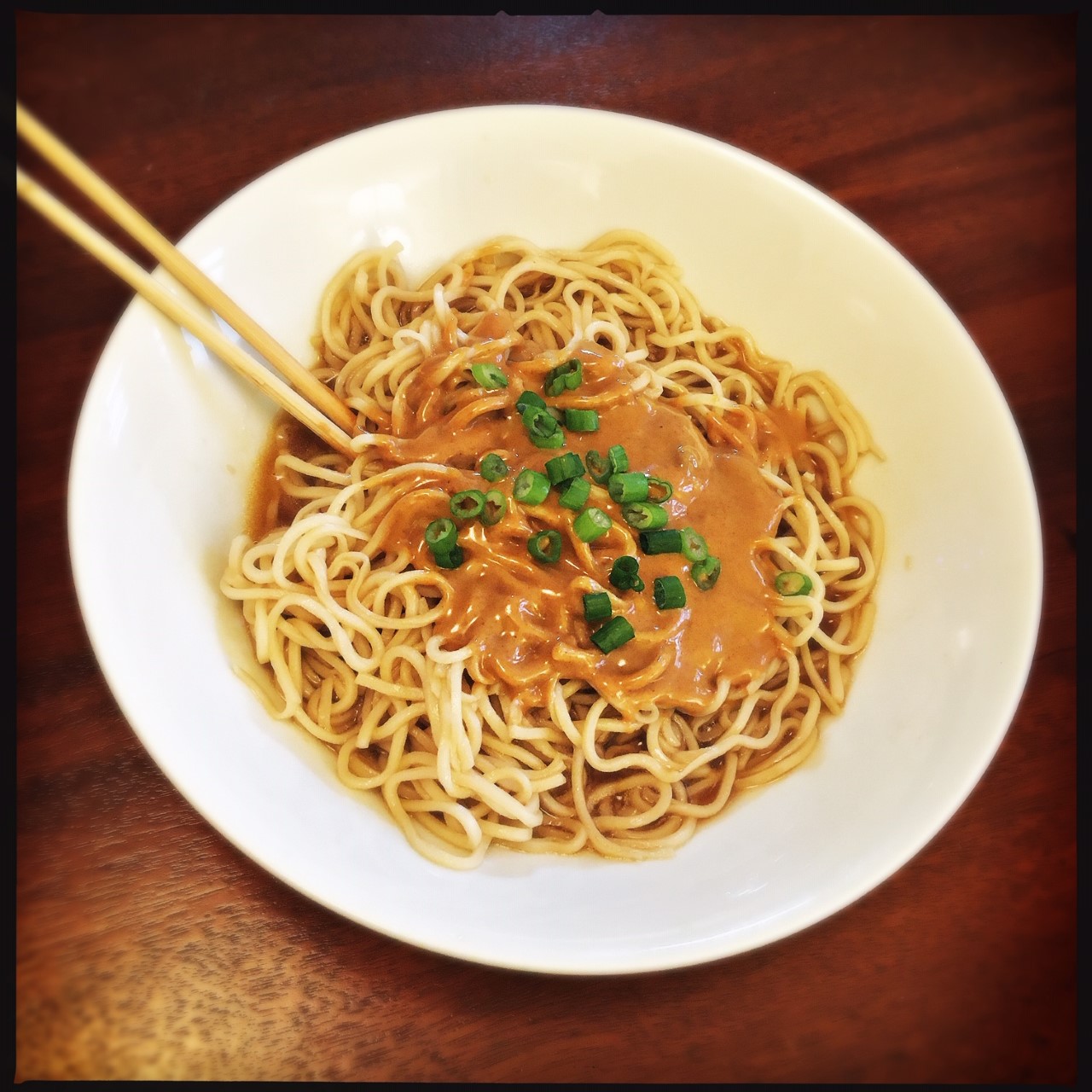
The Verdict
First off, let me say that these are fine noodles. They have a good texture, and the sauce is not too sweet. I tried to make the recipe as faithfully as possible, and was able to find the ingredients at my beloved neighborhood Global Foods Market. I like the thin sauce better than the thick sauce, but it’s a very serviceable recipe. The garlic-ginger tea is easy to make and works well. The thick sauce wasn’t enough to cover all of the noodles, so I’ll make more next time. I used a pound of noodles, as the amount wasn’t specified.
Are they the real deal ESG noodles from my youth? The sad fact is that it’s painfully subjective; it’s getting harder and harder to remember tastes, sights, and smells from so long ago. This recipe is definitely one to add to your collection (and yes, I have a collection). Lately, I’ve been making a version that doesn’t even try to mimic Empire Szechuan Gourmet. It’s from Food & Wine and is very different from ESG, as it uses lots of rice wine vinegar and peanut butter. It’s my wife’s favorite version, which is an important consideration! Here’s the link.